


 All Brands
Tire rotation is one of the simplest yet most important maintenance services for keeping your vehicle safe, efficient, and performing at its best. Many drivers overlook tire rotation, but regularly changing the position of your tires helps ensure even tread wear, better handling, and a longer tire lifespan.
Because each tire on your vehicle performs a different role, they naturally wear at different rates. Rotating your tires at the recommended intervals distributes wear evenly across all four tires, helping you get the maximum value from your investment while improving overall driving performance.
Most tire manufacturers recommend rotating tires every 5,000 to 8,000 kilometers, while many vehicle manufacturers suggest performing tire rotation during routine maintenance visits such as oil changes.
What Is Tire Rotation?
Tire rotation is the process of moving each tire from one position on the vehicle to another according to a specific rotation pattern. Depending on your vehicle’s drivetrain and tire type, the front tires may be moved to the rear, and the rear tires may be moved to the front or switched side to side.
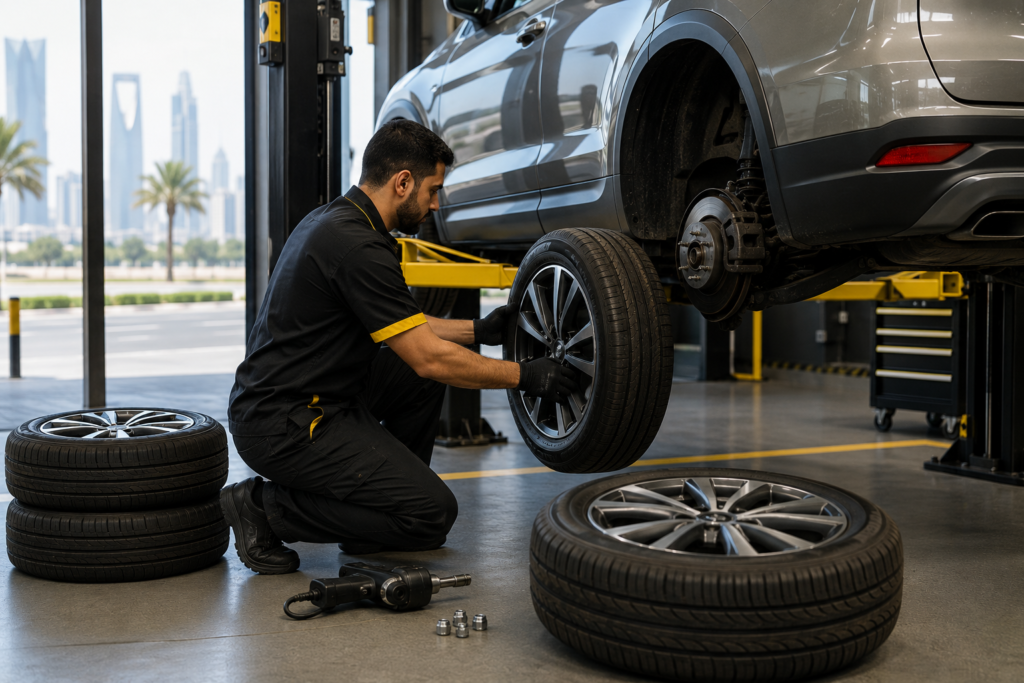
The purpose of tire rotation is to ensure that all tires wear evenly over time. Without regular rotation, some tires may wear much faster than others due to differences in weight distribution, steering forces, and braking loads.
In addition to extending tire life, tire rotation provides an opportunity to inspect tires for damage, check air pressure, evaluate tread depth, and identify potential issues before they become serious problems.
Why Is Tire Rotation Important?
Promotes Even Tire Wear
One of the primary reasons for tire rotation is to promote even tread wear. Since tires do not wear equally, certain tires can lose tread faster than others depending on their position on the vehicle.
For example, in many front-wheel-drive vehicles, the front tires handle steering, acceleration, and a significant portion of braking. As a result, they typically wear out faster than the rear tires.
Regular tire rotation helps distribute this wear more evenly, ensuring all four tires maintain similar tread depth and performance.
Extends Tire Lifespan
Uneven tire wear often leads to premature tire replacement. By rotating your tires regularly, you can significantly increase their lifespan and maximize the mileage you get from each set.
Instead of replacing one or two worn tires earlier than expected, proper tire rotation helps all four tires wear at a similar rate, allowing you to replace them together when necessary.
Improves Vehicle Handling
Balanced tire wear contributes to predictable handling and improved vehicle control. When tires wear unevenly, the vehicle may feel unstable during cornering, braking, or highway driving.
Regular tire rotation helps maintain consistent traction across all four wheels, resulting in smoother steering response and improved road stability.
Enhances Driving Safety
Your tires are the only point of contact between your vehicle and the road. Unevenly worn tires can reduce grip, increase stopping distances, and compromise safety, especially in emergency situations.
Keeping tires properly rotated helps maintain optimal traction and braking performance, giving drivers greater confidence behind the wheel.
Factors That Cause Uneven Tire Wear
Weight Distribution
Most vehicles place more weight on certain tires than others. For example, vehicles with front-mounted engines place additional stress on the front tires because they support the engine’s weight.
This added pressure causes the front tires to wear faster than the rear tires if they are not rotated regularly.
Wheel Alignment Problems
Improper wheel alignment can cause tires to wear unevenly across the tread surface. If your vehicle pulls to one side or the steering wheel is not centered, alignment issues may be contributing to accelerated tire wear.
Unbalanced Tires
Tires that are not properly balanced can develop irregular wear patterns and create vibrations while driving. Combining regular tire balancing with tire rotation helps maintain smooth and even tire performance.
Suspension Wear
Worn suspension components can affect how weight is distributed across the vehicle. This may place excessive stress on certain tires and increase uneven wear during braking, acceleration, and cornering.
Signs Your Vehicle May Need Tire Rotation
Watch for these common signs that indicate your tires may need rotation:
- Uneven tread wear between front and rear tires
- Reduced handling performance
- Increased road noise
- Vibrations while driving
- Different tread depths across tires
- Premature tire wear
Regular inspections can help identify these issues early and prevent unnecessary tire replacement.
Protect Your Tires with Regular Rotation
Tire rotation is a simple maintenance service that delivers significant benefits for tire life, vehicle safety, and driving comfort. By rotating your tires at the recommended intervals, you can reduce uneven wear, improve handling, enhance fuel efficiency, and maximize the lifespan of your tires.
At TireFaster, our experienced technicians provide professional tire rotation services designed to keep your vehicle performing at its best. Combined with proper tire balancing, wheel alignment, and routine inspections, tire rotation helps ensure safer and more comfortable driving on Saudi roads.