


 All Brands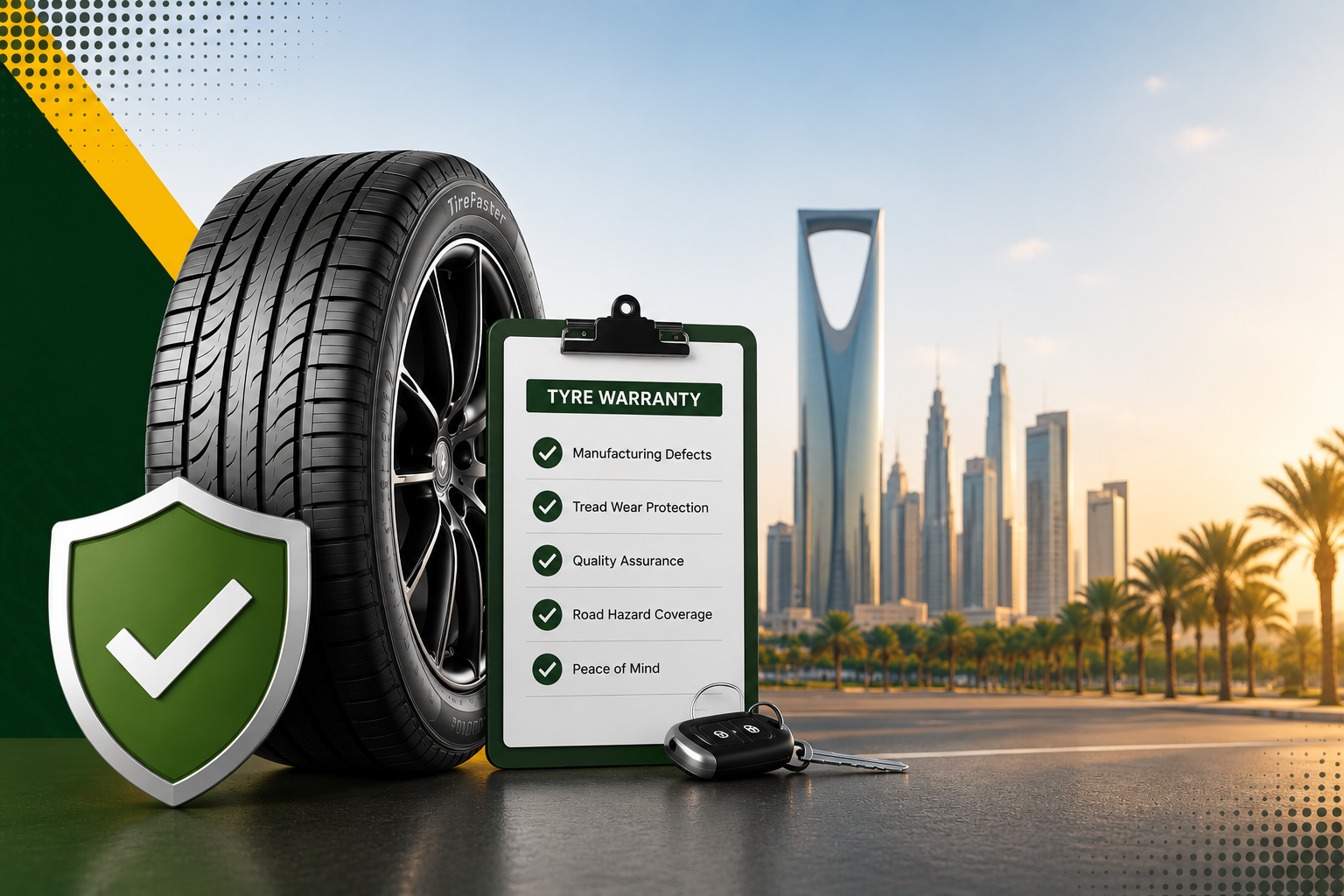
When investing in a new set of tyres, most drivers focus on price, brand, and performance. However, one of the most important factors that often gets overlooked is the tyre warranty.
A tyre warranty is your protection against manufacturing defects and workmanship issues that may affect the safety, durability, and performance of your tyres. Understanding how tyre warranties work can help you avoid unexpected expenses and ensure you get the maximum value from your tyre investment.
In Saudi Arabia, where extreme temperatures, long-distance driving, and varying road conditions place additional stress on tyres, understanding your warranty coverage is even more important.
This guide explains everything you need to know about tyre warranties, what they cover, what they do not cover, how to make a warranty claim, and how to maximize the lifespan of your tyres.
What Is a Tyre Warranty?
A tyre warranty is a manufacturer’s guarantee that covers defects in materials or workmanship under normal operating conditions.
If a tyre develops a defect that is determined to be caused by the manufacturing process rather than external damage or misuse, the manufacturer may repair, replace, or provide compensation based on the warranty terms.
Most tyre manufacturers offer warranty coverage for a specific time period or until the tyre tread reaches the legal wear limit.
Tyre warranties are designed to provide peace of mind and demonstrate the manufacturer’s confidence in the quality of their products. Tyre manufacturers commonly provide warranty coverage against manufacturing defects and workmanship issues under normal use. Coverage periods often extend several years from the purchase date, subject to tread wear limits and warranty conditions.
Why Tyre Warranties Matter in Saudi Arabia
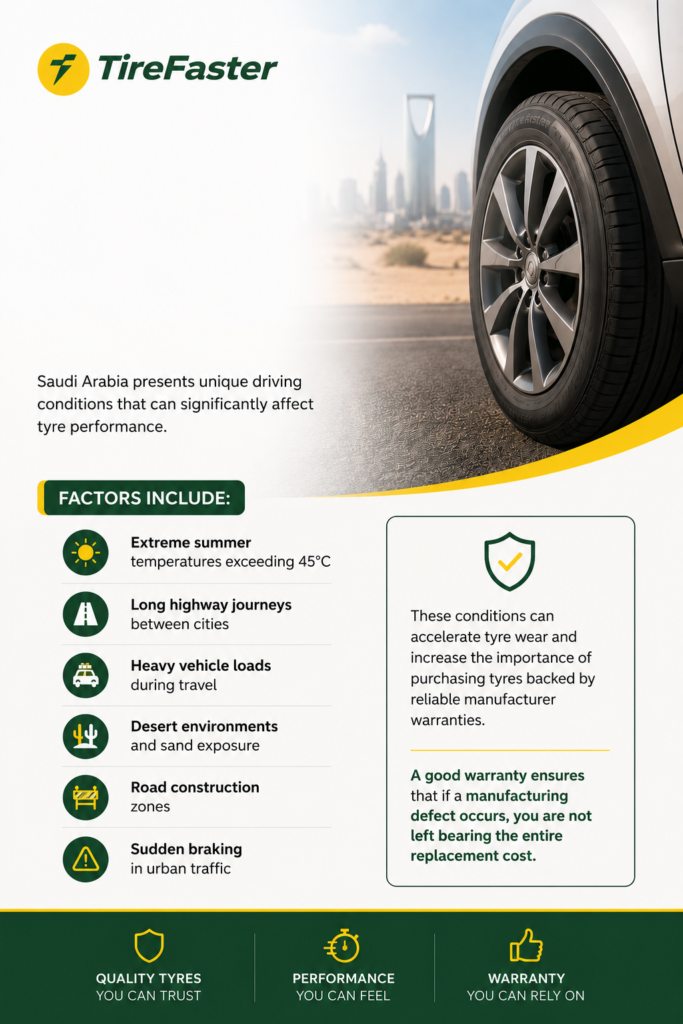
Saudi Arabia presents unique driving conditions that can significantly affect tyre performance.
Factors include:
- Extreme summer temperatures exceeding 45°C
- Long highway journeys between citiesHeavy
- vehicle loads during travel
- Desert environments and sand exposure
- Road construction zones
- Sudden braking in urban traffic
These conditions can accelerate tyre wear and increase the importance of purchasing tyres backed by reliable manufacturer warranties.
A good warranty ensures that if a manufacturing defect occurs, you are not left bearing the entire replacement cost.
Types of Tyre Warranties
Manufacturing Defect Warranty
This is the most common tyre warranty.
It covers defects that occur because of problems during production, including:
- Sidewall defects
- Internal structural failures
- Separation issues
- Material inconsistencies
- Workmanship defects
If the manufacturer determines the issue was caused during production, the tyre may qualify for replacement.
Materials and Workmanship Warranty
This warranty protects against defects related to the materials used in tyre construction and factory workmanship.
Examples include:
- Defective rubber compounds
- Internal belt separation
- Manufacturing irregularities
- Structural weaknesses
Most premium tyre brands provide this type of protection.
Uniformity Warranty
Tyres are manufactured to precise standards, but occasionally a tyre may cause vibration due to manufacturing irregularities.
Uniformity warranties generally apply during the early life of the tyre and may cover:
- Excessive vibration
- Out-of-round conditions
- Manufacturing imbalance
Manufacturers usually require inspection before approving a claim. Manufacturers commonly recognize uniformity-related concerns during the early service life of a tyre and may require inspection to confirm the cause.
Mileage Warranty (Where Applicable)
Some tyre brands offer mileage warranties.
This means the tyre is expected to achieve a specified distance under normal driving conditions.
Examples:
- 60,000 km warranty
- 80,000 km warranty
- 100,000 km warranty
If the tyre wears out significantly earlier than expected, partial compensation may be available.
Mileage warranties vary significantly between manufacturers and tyre models.
How Long Does a Tyre Warranty Last?
The warranty duration depends on the manufacturer and tyre category.
Most manufacturers provide coverage ranging from 4 to 6 years from the purchase date, subject to tread wear limitations.
Warranty duration may be based on:
- Purchase date
- Vehicle delivery date
- Manufacturing date (if proof of purchase is unavailable)
Always keep your invoice because it serves as proof of ownership and warranty eligibility.
What Is Not Covered Under Tyre Warranty?
Many drivers incorrectly assume that any tyre damage is covered by warranty.
This is not true.
Tyre warranties generally exclude damage caused by external factors such as improper maintenance, road hazards, impact damage, incorrect inflation, vehicle alignment issues, accidents, and normal wear.
Common exclusions include:
Road Hazard Damage
Examples:
- Nails
- Glass
- Metal debris
- Sharp objects
Impact Damage
Examples:
- Potholes
- Curbs
- Speed bumps at high speed
Incorrect Tyre Pressure
Driving with:
- Underinflated tyres
- Overinflated tyres
can cause abnormal wear and invalidate warranty claims.
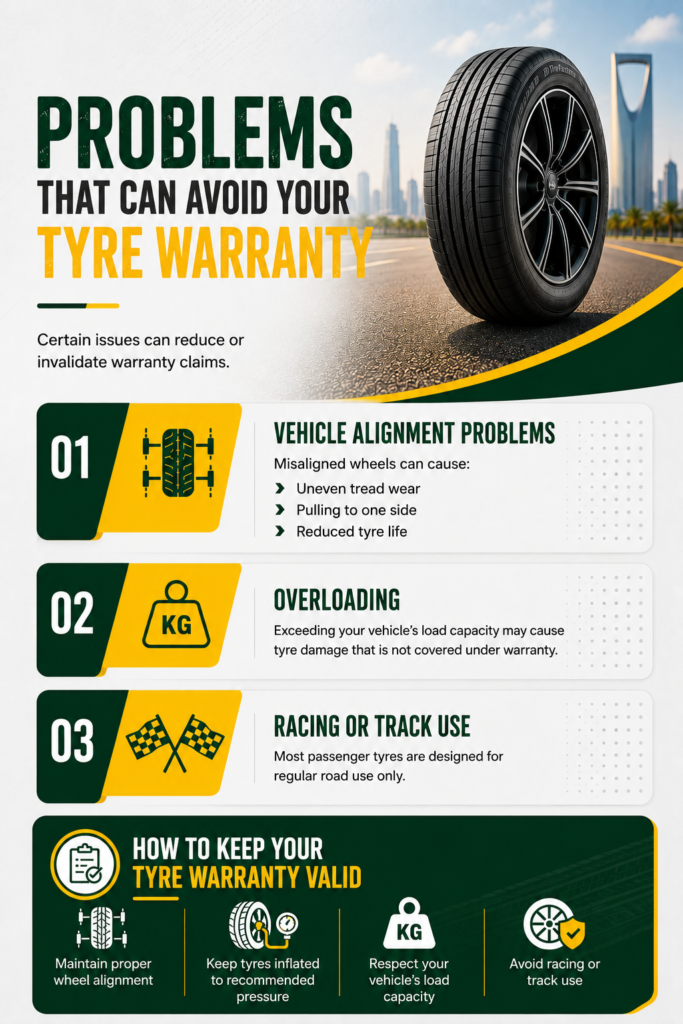
Vehicle Alignment Problems
Misaligned wheels can cause:
- Uneven tread wear
- Pulling to one side
- Reduced tyre life
Overloading
Exceeding your vehicle’s load capacity may cause tyre damage that is not covered under warranty.
Racing or Track Use
Most passenger tyres are designed for regular road use only.
How to Keep Your Tyre Warranty Valid
Many warranty claims are denied because drivers unknowingly violate warranty conditions.
Follow these best practices:
Check Tyre Pressure Monthly
Saudi Arabia’s high temperatures can affect tyre pressure.
Regular pressure checks improve:
- Safety
- Fuel efficiency
- Tyre lifespan
Rotate Tyres Regularly
Rotate every 8,000–10,000 km.
Benefits:
- Even tread wear
- Better handling
- Longer tyre life
Maintain Wheel Alignment
Alignment should be checked:
- After hitting potholes
- After suspension repairs
- When uneven wear appears
Balance Your Wheels
Wheel balancing reduces vibration and promotes even wear.
Keep Service Records
Documentation helps support warranty claims.
Maintain records of:
- Tyre rotations
- Alignments
- Pressure checks
- Inspections
Understanding Tyre DOT Codes
The DOT code identifies when a tyre was manufactured.
Example:
DOT XXXXXX 2325
Meaning:
23 = Week of production
25 = Year 2025
This indicates the tyre was manufactured during the 23rd week of 2025.
DOT information can become important if proof of purchase is unavailable.
How to Make a Tyre Warranty Claim
If you suspect a manufacturing defect, follow these steps.
Step 1: Stop Driving If Safety Is Affected
If you notice:
- Bulges
- Cracks
- Separation
- Severe vibration
Have the tyre inspected immediately.
Step 2: Gather Documentation
Prepare:
- Purchase invoice
- Vehicle information
- Tyre photographs
- Maintenance records
Step 3: Contact TireFaster
Provide:
- Order details
- Tyre size
- Brand
- DOT code
- Description of the issue
Step 4: Tyre Inspection
The tyre may be inspected by:
- TireFaster
- Authorized distributor
- Manufacturer representative
Step 5: Manufacturer Evaluation
The manufacturer determines whether the issue qualifies for warranty coverage.
Step 6: Resolution
Possible outcomes:
- Full replacement
- Partial replacement
- Pro-rated credit
- Claim rejection if damage falls outside warranty coverage
Final warranty approval generally rests with the tyre manufacturer after inspection and review.
Warning Signs That May Indicate a Tyre Defect
Watch for:
Sidewall Bulges
May indicate internal structural damage.
Unusual Vibration
Persistent vibration despite balancing could indicate a tyre defect.
Tread Separation
Requires immediate inspection.
Uneven Wear Patterns
Can result from:
- Alignment issues
- Suspension problems
- Manufacturing concerns
Air Loss
Repeated pressure loss may indicate internal damage.
Tyre Warranty Myths
Myth 1: All Tyre Damage Is Covered
Reality:
Only manufacturing-related defects are generally covered.
Myth 2: Warranty Covers Punctures
Reality:
Road hazard damage is usually excluded.
Myth 3: Warranty Lasts Forever
Reality:
Coverage ends after the specified period or when the tread reaches the minimum wear limit.
Myth 4: No Invoice Is Needed
Reality:
Proof of purchase significantly simplifies warranty claims.
Myth 5: Heat Damage Is Always Covered
Reality:
Heat-related damage caused by underinflation or misuse is generally not covered.
Why Buying Genuine Tyres Matters
Purchasing tyres through authorized channels helps ensure:
- Genuine products
- Manufacturer support
- Valid warranty coverage
- Professional installation
- Easier claim processing
Always verify tyre authenticity and purchase from trusted suppliers.
Frequently Asked Questions
Does a tyre warranty cover punctures?
No. Punctures and road hazard damage are usually excluded.
Can I claim warranty if my tyre wears out quickly?
Only if the manufacturer determines the wear is related to a covered defect or mileage warranty condition.
What documents are required for a warranty claim?
Typically:
- Invoice
- Vehicle information
- Tyre identification details
- Inspection records
Are warranties valid across Saudi Arabia?
Manufacturer warranties generally apply throughout Saudi Arabia when tyres are purchased through authorized distribution channels, and warranty conditions are met.
Can I transfer my tyre warranty?
Most warranties apply only to the original purchaser, though terms vary by manufacturer.
Conclusion
A tyre warranty is more than just a document—it is an important layer of protection that helps safeguard your investment and your safety on the road.
Understanding what is covered, what is excluded, and how warranty claims work can save you time, money, and frustration.
At TireFaster, we believe that informed drivers make safer decisions. Whether you are purchasing premium, mid-range, or budget tyres, understanding your warranty rights helps ensure you get maximum value and confidence from every kilometre driven.
Before purchasing your next set of tyres, always review the manufacturer’s warranty terms, maintain your tyres correctly, and keep your purchase documentation safely stored.
Your tyres are the only part of your vehicle that touches the road—protect them, maintain them, and make sure your warranty works for you.